Transcript
Automatically transcribed and lightly reviewed. Wording may contain errors. For health concerns, consult a qualified professional; this conversation is for general information, not individualized advice.
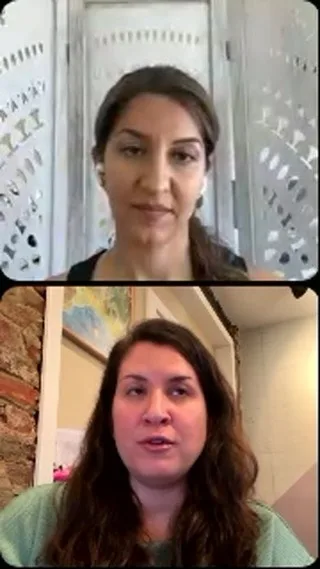
00:00Happy Wednesday. Welcome to Instagram Live. Today's guest is Dr. Parga-Belinkie. She was on episode
00:07150 of the Baby Steps Nutrition Podcast. Today she is here to talk about that incredibly important
00:16mother-infant connection during breastfeeding and she has a wealth of information and I'm
00:23excited to have her join us. Good morning. Good morning. How are you? Good. It's nice to see you.
00:43it's good to see you too i guess it's actually the afternoon here in philadelphia that's right
00:47so i i say good morning but i have to realize what time zone i'm in like other people may
00:52have had lunch or they're having dinner and it's just the beginning of the day for us here
00:57oh that's great yeah i just had lunch so so you know with kids nine o'clock is already half the
01:06day is is gone so you kind of get thrown into the day and then you got to get the day started
01:11yeah we uh we typically are up at about 6 30 every day sounds about right it's deep into the
01:19day here it's like phase three of the day yes someone the other day was asking they're like
01:24oh it's great you're such a morning person I said not by choice but since I became a mother
01:29I forcefully became a morning person and you know with kids they they win so I had to really pivot
01:35and change my whole lifestyle mindset and get the day started. But if it was up to me, I'd be a
01:41night owl. I am a night owl. And even being in medicine as a doctor has not shifted me to the
01:48daytime. Same with my kids. So there's always a pile up in the bed in the morning as they're
01:52trying to wake me up. Yes. It's like a bucket of ice cold water, right? You just, you just get up
01:59and go. Tell us about yourself. I know about you, but I'd love if you could share your background.
02:06Why is it so important for you? Why is this an area of passion of yours to talk about that mother
02:11infant attachment and connection? So my name again is Dr. Joanna Parga-Belinkie. I'm a neonatologist,
02:19which is a baby doctor and also a pediatrician and a lactation consultant. So I work in Philadelphia
02:26at the Children's Hospital of Philadelphia and also the University of Pennsylvania.
02:31And because I work so closely with babies and parents, particularly right after delivery,
02:38and I work both in the neonatal intensive care unit, which is where babies go when they need
02:43extra help after delivery, and I also work in the newborn nursery. So I kind of work in both
02:48environments where I see babies who have been sick and need NICU care and also well babies that are
02:55going to be sent home and usually 24 to 48 hours with their families so a lot I spent a lot of time
03:01with babies and I think because I work in the NICU and it's an area where attachment can be
03:07difficult for families it got me really interested in how we bond with our babies and how to make
03:12those connections even if the circumstances are not ideal and I and I'm also a mother of three
03:18So I have a seven-year-old, a five-year-old, and a one-year-old.
03:23And that comes with its own crash course in bodging with babies when they're your own
03:29and not the ones that you see in the hospital.
03:33And I trained in caring for babies because it's just a patient population I love.
03:39Because not only are you caring for the baby, you're also caring for the whole family.
03:44And I really love that about the care I provide in the hospital.
03:47yeah and tell us what does it mean to have a healthy attachment why is it important to
03:53try to develop that early on or as early on as possible we know sometimes circumstances arise
03:59that are out of our control well it's interesting i think you know in the modern world there's so
04:05much information that comes at us all the time right and so it's hard to process and filter all
04:11that information and i think the baby space is one area where you get a lot of information because
04:16people know it can be a challenging phase of parenting it's very demanding babies need 24
04:217 care so you always feel like you have to be you know on with a baby and as a result i think that
04:27it's an area that gets a lot of attention there's a lot of advice there's a lot of people kind of
04:32telling you what you should or shouldn't do and i really believe in parenting there's no really
04:37shoulds and shouldn'ts you know like everybody has their own style of parenting right but we
04:44know there are safe evidence-based things that your baby needs to grow and thrive and um and one
04:50of the most important things is a safe stable nurturing relationship with a trusted caregiver
04:55right and i i want parents to know kind of that they are enough that this connection is really
05:03important and that it is really brain building for baby too because in that first year of life
05:09the brain is growing sort of exponentially it's making new connections it's firing up so to speak
05:14you know the baby is learning so much and it's really safe stable nurturing relationships that
05:20set that baby up for how they're going to have relationships in the future for how they're going
05:25to learn and and how they're going to do in school and how they're going to have resilience and so
05:30it's such an important thing for babies again because those first few years are just an incredible
05:36time for brain growth. So I really want parents to know that they are enough. I was in a meeting
05:42the other day where someone said, you know, a parent is the best toy for their baby. And I don't
05:47know if I want to, I'm not quoting that per se, because sometimes it looks like a toy. But they
05:54are the best sort of stimulation and presence and their presence matters so much in how their baby
05:59grows and develops. And that's what I really took from that comment. And what are some things both
06:04mom and dad can do to bond with their baby? You cut out a little bit there. Oh, things that mom
06:12and dad can do to bond with their baby. Because like you said, there's so much information out
06:16there. It could be so complicated. It could feel overwhelming. Let me see. Did we lose a little
06:39connection there? I think we lost a little connection, right? Yeah, sorry. No, this is
06:51the downside of the live videos. No, I was just asking things that mom and dad can do
06:56to bond with their baby because as you mentioned there's an overwhelm of information there's a lot
07:02of different voices a lot of opinions but what can parents do and how can we simplify life for them
07:10but also impactful yeah I think there's a lot you can do right and I'm curious to hear your
07:16experiences as a parent too but when I when we think about these safe stable nurturing relationships
07:23and how we build them, I think that that's one thing parents can do is kind of shift
07:27away from, you know, all this noise they hear about infant care and what they should be
07:32buying and what they should put on their registry and really think about how they're going to
07:35develop this relationship, right?
07:37And I think for some families, that's going to be a frame shift in how they felt before
07:41about caring for a baby, right?
07:44Because it can be sometimes hard to envision how this person is going to grow up and who
07:50they're going to be.
07:51But when you spend time doing that, I think it's really helpful for you to see what values you want to pass on, show the qualities and relationships you want them to emulate when they start getting older and having relationships.
08:04And I think that can kind of take you out of this craziness of newborn parenting a little bit is to think about that relationship and how do you build it?
08:13you know if you're the best quote toy for your baby or you're the one who's going to be shaping
08:18them um what i tell a lot of new parents is just inviting them into your life you know and and
08:24remember the things that are really stimulating and brain building for a baby often aren't for us
08:29right as adults because because our brains are already formed and and we have expectations and
08:34other things that you know we want out of a day for example but um something that i always loved
08:40doing with my baby was just talking to them you know and that could be like while we were folding
08:43the laundry right and as you're talking to them they are responding in their own way and that
08:50response starts to get better and better the more you're talking and interacting with them and
08:54inviting them to do kind of your activities of daily living with you right and and that's called
08:59servant return and that I think is just a really powerful tool in communicating with your baby and
09:04building that relationship so it's when the baby's like goo goo gaga or making noise you make that
09:10noise back and then you tell them something else you know about what you're doing or what you're
09:14seeing or what the lighting in the room is you know it really could be anything but as you start
09:19to go back and forth with language and with conversation you're going to start to notice
09:23that they're going to be responding more and more and kind of listening to your cadence and
09:27your cues and that's why I really love and this is such a simple thing to try to fit into your
09:32schedule, just reading to your baby every day. And I don't think there's like a magic amount of time,
09:37right? Like, I would say 15 minutes seems like a good amount of time. But if you could just carve
09:42out a little bit of your day to just read to baby. And when they're really, really little,
09:47it doesn't have to be a picture book, it could be something that you that you want to read.
09:52I read a lot of romanticcy to my very, very young newborns. But then as they get older,
09:57there's so many great picture books and other ways that you're just going to start to
10:01do this serve and return, have this back and forth with your baby and grow that relationship.
10:07Yeah. And everything you were saying at the core of all that is a relaxed parent. And one of the
10:14most powerful statements that I learned as a parent is every child deserves to have a happy,
10:19healthy parent. Because when you're in a state where your central nervous system is relaxed,
10:25when you're present your children feed off that energy and so it's really just about the basics
10:32like when you're calm and you're in that moment just letting everything else go and sometimes it
10:37is hard to do that right we need to be realistic like there's a lot on our minds you know as you
10:42said we're adults we have a different brain than our babies but if we can try to at least make that
10:48effort and try to be mindful and present with our babies and like you said if it's music that
10:53relaxes you like that's something I always had playing that's something that I loved right so
10:57sometimes silence for me was too quiet but I have music playing in the background and now this is
11:02something my kids are used to and they're always listening to music too but music for every mood
11:07for example and that's something like when I was cooking or when I was playing there would be
11:12something playing and so whatever that works for you to get you in that place where you're enjoying
11:17yourself and you're enjoying your environment and your baby, your baby's going to benefit from it
11:23too. Oh, it's so great that you shared that because I think music is another really great
11:28tool for when you're trying to connect with baby. And again, what's nice when they're little is it
11:33can be music that you like too. You know, it doesn't have to be all the kiddo music. Though
11:38sometimes some of the music can be really overstimulating. Yes. And then when they're
11:43teenagers they have their own taste in music and then they're no longer interested in yours so
11:49but you know enjoy it while it lasts for sure yeah yeah for sure um talk to us about postpartum
11:57health challenges because you have a baby you know we all want to do our best we all have the
12:02best intentions but sometimes the circumstances are not set up to support you know this beautiful
12:08bonding experience with our baby so what do you suggest for parents moms who are struggling with
12:14postpartum depression blues it just you know they want to be there but they can't because there's
12:20other things going on with them yeah about 80 so this is the majority of new moms are going to have
12:30something called postpartum blues and that's just this sometimes feeling of sadness and i don't know
12:35if you remember this after having your babies but some things would just make me cry and it wasn't
12:40something that would make me cry when I wasn't pregnant or with a newborn you know um so you're
12:47you're just more emotional and I think a lot of new parents will put pressure on themselves when
12:52it's not love at first sight but their baby you know the baby comes out and they are just full of
12:56emotion and maybe it's not good emotion and they've already feel like you know either they're
13:02failing as a parent or you know this was a mistake or something you know that's that's negative and
13:07not what the positive love that they wanted to feel right away and that's not uncommon and you
13:14have to give yourself grace and time and space to build a relationship with this person if you think
13:19about some of the most loving trusting caring relationships in your life often they are not
13:24built overnight or after one incredible moment of birth you know however and incredible can mean a
13:31bunch of different things. But the moment of birth is so powerful and emotional. And you can't base
13:39everything about your relationship on that one moment. So I always tell new families that even
13:45if the birth did not go as they expected, there's still this whole life to build with this person.
13:52And I think, again, reframing to think about the long term and the relationship you want to build
13:56can sometimes get you out of that moment of sadness right and then for some new moms though
14:01that and you know parents even we can include dads and as the moment of sadness is not just a
14:06moment it goes on you know for for weeks or months and that's when you got to be worried about
14:11postpartum depression and make sure you have resources to support yourself and a lot of times
14:17OB-GYNs have great resources for helping with postpartum depression or or prolonged baby blues
14:22but also pediatricians. And I don't think people realize that, but pediatricians' offices are often
14:27equipped to help get moms resources when their mental health is suffering. And I know, for
14:34example, my pediatrician here in Philadelphia was always screening for postpartum depression in new
14:39moms, which I thought was great. So finding a pediatric care provider that you really trust,
14:44I think, is another good avenue for dealing with mental health issues, which are so common
14:49after delivery and so just know that it's common know that it doesn't have to be love at first
14:55sight that you're building a lifelong relationship and get help when you're not feeling well because
15:00your mental health matters for how you're building a relationship and how that baby's going to grow
15:04and thrive yeah and that is my biggest advice for new moms is ask for help i know as women we're
15:10built to be tough we're meant to power through but especially when you become a new mom that is
15:15not the time to be a warrior I mean you already are having brought a baby into this world but do
15:21ask for help and if someone offers as hard as that might be accept it because it's so important it
15:28really does take a village and you don't know until you're in it where you're like oh man
15:32this is not meant to be done alone so that's my big advice like we were just talking about safe
15:39stable nurturing relationships for baby how that develops their brain how they grow with that but
15:44those safe stable nurturing relationships are really important for the caregiver too
15:48to be able to model these relationships to to know what their values are and also to support
15:55them through you know what's a time of a lot of change of the body if you gave birth of the home
16:02of you know there's a whole new person in the world so of how your relationships are and so
16:07it's definitely a time you want to lean on your own safe stable nurturing relationships because
16:12those are still things that when you're older, we're social creatures, you're going to need
16:16to be able to thrive as a parent. For sure. And Dr. Parker-Belingi, one of your areas that you
16:23like to focus on is breastfeeding and connection. But let's talk about the non-nutritive benefits
16:28of breastfeeding. Yeah, I'm so glad that you brought up the non-nutritive part, because I
16:36think sometimes we do focus a lot on what's in breast milk. And there are some great benefits
16:40in breast milk itself, right? It is something that is dynamic. So it'll change with the baby
16:46and it'll, it'll alter the contents of itself, you know, as the baby gets older, which is really
16:51interesting. It also has immune benefits for the baby, right? So it does help protect against
16:56infections, particularly in that first year, if you're able to offer breast milk. So there are
17:02those advantages. And, you know, there, sometimes when I think about the benefits of breastfeeding,
17:07particularly in connection too, I think about mom and baby as two separate things, right? And so
17:15for the mother, it actually helps release oxytocin, which is this bonding hormone
17:20to help you form a relationship with baby. It can help with recovery. So this is like a little more
17:27physical than psychological and bonding, but it helps shrink the uterus in size. It can actually
17:32help with with the prevention of certain cancers as you age so and with metabolic diseases like
17:39type 2 diabetes um so it has and they say it helps with weight loss that was not my experience for
17:46us if anything weigh gain right because i was ravenously hungry whatever and i and i and when
17:53i found as a working mom that when i limited my calories it um it affected my supply and so i was
17:59unable to do things like that but but I really do think it you know with the hormonal with the
18:05bonding you know and something as a working mom too is when I would get home from work
18:09you know it was just this kind of like instant connection where I also felt like I was providing
18:13nutrition and so mentally for me I enjoyed the experience of breastfeeding for those reasons
18:19now there are people who have you know really heightened emotions when when a baby latches
18:25and don't feel good when they breastfeed so so this is not a silver bullet for bonding with
18:31your baby I think is what I want to say I think there are you know a lot of parents will say
18:36that it makes them feel good because they are providing nutrition because they they do have
18:41that connection it's something that they get to do you know but but at this on the at the same time
18:47there there are people who say it doesn't feel good and it doesn't help them connect right so
18:53that's why I think it's not again like a panacea of like everybody who breastfeeds is going to feel
18:58these great connections even with that oxytocin release right but um but it is one way that you
19:05can bond with baby and we didn't you know you asked a question earlier like how are ways that
19:09you bond and there are many many different ways and I would say this is just one of many different
19:13ways that you could you could strengthen your connection with baby yeah I love that and for
19:19For people that are listening, if you could leave them with one message about connection
19:23and attachment, what would that be?
19:26I want to get back to what I said earlier, which is you are enough.
19:31A safe, stable, caring, nurturing relationship, having just one in a baby's life is going
19:37to help them flourish and grow.
19:39Having multiple is even that much better, right?
19:41And so it's your interactions that are shaping who this person is going to become.
19:47It's a really, really, really powerful thing. And, and, and I think in this busy world, it can be easy to forget how important you are, but you are so important for your baby for who they're going to become for how their brain is going to grow. And so give yourself the time, you know, I think also in our society, we don't give new parents enough time to be bonding with their babies and to be making that connection.
20:16And I think we could do a lot in advocacy and policy to get more parental leave for families, particularly here in the United States.
20:22But give yourself that time. You're worth it.
20:25And it's going to make a huge difference in how your baby grows and thrives.
20:28I love that. And where can our viewers find out more about you and your work?
20:34Well, they know my Instagram handle. I also have a website, jpbilinkemd.com.
20:40I work a lot with the American Academy of Pediatrics, so I recommend checking out their resources.
20:45You'll find me in a lot of them.
20:46I do their podcast, Pediatrics on Call.
20:49I'm one of the co-hosts for that podcast.
20:50And you can find that sort of in any podcast platform where you listen to podcasts.
20:56And my book will be available on Amazon, on the AAP website, on any sort of like online
21:03bookstore.
21:04It's going to be at Headhouse Books in Philadelphia.
21:07I'm doing a little bit of a book signing there in May when the book comes out.
21:10And that'll be on May 20th.
21:12So you can look out for it after that date.
21:14Awesome. And I'll be sure to share that link. And as I mentioned at the beginning,
21:19you were on episode 150 of the Baby Steps Nutrition Podcast. You can find it wherever
21:24you listen to your podcasts. And I hope to have you back on because there's so much more that we
21:30can talk about. I want to thank you so much for your time and above all your message and everything
21:36that you're putting out there. I think it's so important for new families just to hear a sound
21:41voice that is not only knowledgeable, but warm and compassionate. I think we need more of the latter.
21:48And as you said, in this busy world that we live in. So thank you so much for being here. Thank
21:53you for the work that you do. And I know I'm going to be in touch. So yeah, thank you so much
21:59to chat with you. And anytime you want to talk to babies, just, just give me a ring.
22:07all the time will do and thank you to everyone who tuned in happy wednesday
22:14have a good rest of your week bye